PL Mount vs E Mount: Cinema Lens Compatibility Guide
Which cameras accept PL or E mount cinema lenses? Adapter selection, autofocus loss, flange focal distance — pairing guide for Sony Venice 2, FX series, Blackmagic Pocket 6K Pro PL and RED Komodo.
The most expensive — and most overlooked — mistake in renting cinema cameras: the wrong mount combination. The wrong adapter set means no iris control on shoot day; the wrong lens-camera pairing means vignetting on set. This guide walks you through Turkey's rental inventory and clarifies PL mount, E mount, and the adapters that bridge them — which lens fits which camera, whether autofocus survives, and which mount makes sense per scenario.
What Is a Mount, and Why Does It Matter?
A mount is the physical connection + electronic communication interface between lens and camera body. A standard cinema lens, when mounted to a body:
- Aligns the optical path correctly (flange focal distance)
- Sends/receives iris/aperture control
- Carries autofocus motor signal (if supported)
- Records lens metadata (focal length, T-stop, lens model — critical for post)
Flange Focal Distance — Which Mount, What Distance?
Flange focal distance (FFD) is the distance between lens mount and sensor:
- PL mount: 52mm — the film/cinema standard (Arri lenses since the 1980s)
- E mount (Sony): 18mm — mirrorless era, short flange
- RF mount (Canon/RED Komodo): 20mm
- EF mount (Canon DSLR): 44mm
- X mount (Fujifilm): 17.7mm
- MFT mount (Panasonic/Olympus): 19.25mm
Practical rule: Short-flange bodies (E, RF, X, MFT) accept long-flange lenses (PL, EF) through an adapter. The reverse — using a short-flange lens (E) on a long-flange body (PL) — is physically impossible because the lens can't sit close enough to the sensor to focus.
PL Mount In Depth
Who uses it: Traditionally Arri Alexa, RED, Sony Venice; in Turkey's current inventory:
- Sony Venice 2 6K — interchangeable mount (with PL kit)
- Blackmagic Pocket 6K Pro PL — PL native
- RED KOMODO 6K — RF native, PL kit optional
- Sony Burano 8K — E native, swappable to PL kit
PL mount lenses (inventory-bound):
- Zeiss CP.2 PL Set — 3,500 TRY/day — classic cinema character
- Zeiss Nano Prime PL Set — 5,500 TRY/day — modern, lightweight
- Sigma Cine Zoom PL Set — 1,750 TRY/day — 18-35 + 50-100mm
- Tokina Cine Zoom Set — 2,250 TRY/day — 11-20/25-75/50-135mm
- Laowa Ranger Zoom Set — 7,500 TRY/day — premium full-frame zoom
- Blazar Remus Anamorphic Set — 2,500 TRY/day — anamorphic
- Tokina Cinema 100mm Macro PL — 700 TRY/day
- Laowa 12mm T2.9 Zero-D PL — 750 TRY/day
- Laowa 8-15mm T2.9 Fisheye PL — 2,000 TRY/day
- Canon Cine Prime Set — 3,500 TRY/day
- Laowa 24mm Periscope 3-Lens Set — 4,500 TRY/day — specialty/creative
PL mount strengths:
- Most mechanically robust — built for heavy cine lenses
- Traditional film/cinema standard — DPs, 1st AC, focus pullers all know this workflow
- All primes share matched T-stops (T2 or T2.1) — no exposure shift between lenses
- Set rental is 30-40% cheaper than renting individual lenses
Limitations:
- Heavy — handheld shooting causes fatigue
- NO autofocus — manual focus pulling required, you work with an AC
- NO automatic iris control — manual aperture
- More expensive — daily rental 2-3x photo lens equivalent
E Mount In Depth
Who uses it: Sony Venice 2 (native), Burano 8K, FX9, FX6, FX3, FX30, A7 series.
E mount lenses (inventory-bound):
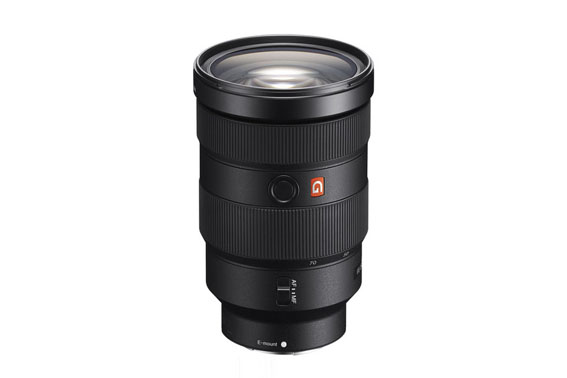
- Sony G Master Prime Set — 3,400 TRY/day — 24/35/50/85/135mm
- Sony G Master Zoom Set — 2,250 TRY/day — 16-35/24-70/70-200mm
- Sigma Art E-mount Lens Set — 2,500 TRY/day — 14/24/35/50/85mm matched
- SLR Magic MicroPrime Cine Set E — 1,500 TRY/day — cine ergonomics + E native
- Sony FE GM individual lenses: 24mm GM, 35mm GM, 50mm f/1.2 GM, 85mm GM, 135mm GM
- Sony FE GM zooms: 16-35 GM II, 24-70 GM II, 70-200 GM II, 100-400mm GM, 200-600mm G OSS
- Laowa 10mm f/2.8 E mount — 800 TRY/day — wide angle
E mount strengths:
- Lightweight — ergonomic for handheld + gimbal work
- Autofocus available — eyetrack AF + tracking critical for documentary/commercial
- Auto iris control — automatic exposure in changing light conditions
- Wide photo+video lens library — economical individual lens options
- Faster lens swaps (vs. PL)
Limitations:
- Photo-lens character — lacks the cinema "look" of cine lenses
- Filter threads usually small — matte box may need step-up rings
- Individual primes don't share matched T-stops (photo F-stops, breathing present) — falls behind a cinema set in quality
- Heavy cine zooms (28-300mm Cine etc.) may overstress the E mount — PL native is sturdier
Cross-Compatibility via Adapters: PL → E, EF → E, EF → X
Short-flange bodies (E, RF, X, MFT) take long-flange lenses (PL, EF) through adapters. Adapters in the current inventory:
| Adapter | Direction | Daily Rate | What's Preserved, What's Lost |
|---|---|---|---|
| Metabones PL-E | PL lens → E body | 250 TRY/day | No optical loss. AF unavailable (PL doesn't have it anyway). Iris manual. |
| Metabones EF-E | EF lens → E body | 250 TRY/day | Auto iris preserved. AF: limited (slow, can hunt). |
| Wooden Camera E-LPL | PL/LPL lens → E body (especially Komodo) | 1,000 TRY/day | Premium adapter, mechanically solid. AF unavailable. Iris manual. |
| Metabones PL-X (Cine, Fujifilm) | PL lens → X body | 250 TRY/day | For Fujifilm X-H2S. AF unavailable. Iris manual. |
| Commlite EF-FX AF | EF lens → X body | 250 TRY/day | AF preserved (slow). Auto iris preserved. |
| Kipon PL-MFT (Lumix) | PL lens → MFT body | 250 TRY/day | 2x crop factor — PL wide angles lost. AF unavailable. |
| Metabones EF-MFT 0.64x Converter | EF lens → MFT body (full-frame equivalent) | 250 TRY/day | Reduces crop factor (0.64x), gains 1 stop of light. AF preserved. |
Considerations when picking an adapter:
- Auto iris need: For documentary/commercial with changing light, prefer EF-E (Metabones). PL adapters are always manual iris.
- AF need: Solo DP documentary uses EF-FX/EF-E (slow AF); otherwise don't expect AF on PL sets.
- Mechanical robustness: For heavy lenses (200mm+ telephoto) prefer Wooden Camera — Metabones is lighter.
- Optical loss: Most modern adapters carry no optical element (just a distance ring). Optical loss is negligible.
Camera × Mount × Lens Combinations (Inventory-Bound)
| Camera | Native Mount | Direct PL Compatibility | Direct E Compatibility |
|---|---|---|---|
| Sony Venice 2 6K | Interchangeable (PL/E) | Direct with PL kit | Direct with E kit |
| Sony Burano 8K | E (PL kit optional) | With PL kit (extra fee) | Direct |
| Sony FX9 / FX6 | E mount | Via Metabones PL-E adapter | Direct |
| Sony FX3 / FX30 | E mount | Via Metabones PL-E adapter | Direct |
| RED KOMODO 6K | RF (PL kit optional) | Via Wooden Camera E-LPL | Not practical (RF native) |
| Blackmagic Pocket 6K Pro PL | PL native | Direct — no adapter | Not direct (FFD difference) |
| Fujifilm X-H2S | X mount | Via Metabones PL-X adapter | Not practical |
Which Mount Setup for Which Project?
| Project Type | Recommended Mount Setup | Why |
|---|---|---|
| Commercial (speed priority) | E mount + Sony G Master / Sigma Art | Eyetrack AF, fast lens swap, multi-cam matching |
| Cinema / short film (quality priority) | PL mount + CP.2 PL or Zeiss Nano Prime | Cine character, matched T-stops, follow-focus compatible |
| Documentary (run-and-gun) | E mount + AF lens (Sony GM individual lenses) | Solo DP, fast focus, lightweight body |
| Music video (style priority) | PL mount + anamorphic or Tokina Cine | Distinct character, cinematic look |
| Corporate video | E mount + AF + IBIS | Fast setup, automatic exposure, user-friendly |
| Indie / festival project | PL mount + Blackmagic Pocket 6K Pro PL | Most economical PL workflow — body 1,100 TRY + adapter-free |
Mount Swaps on Set — Practical Notes
1. Watch for Dust
The sensor is exposed during a mount swap. Don't change mounts in a windy outdoor location — dust enters the sensor and shows as spots in subsequent shots. Do mount swaps in a controlled environment (vehicle, tent). For sensor cleaning, contact us.
2. Backfocus Adjustment (especially PL)
PL lens-to-body backfocus (collimation) adjustment is critical. Footage shot with mis-set backfocus appears unfocused in post — irreparable. At Film Makinesi, we test backfocus on PL sets before delivery. If you have any doubt, ask for the test to be repeated.
3. Filter Thread Compatibility
PL sets use matte box bayonet (4×4 or 4×5.6 inch standard). Photo lenses (E-mount Sony GM, Sigma Art) have different thread sizes — 67/77/82mm. Switching mounts means switching filter setup. Confirm filter compatibility before setup.
4. Mount Swap Time Cost
An E → PL kit swap on a Sony Burano takes 5-15 minutes. Account for this in the shot list — schedule swaps during natural scene breaks.
Six Common Mistakes — Don't Make These
- Expecting AF on adapters: No autofocus through PL adapters. PL = manual focus. Knowing this in advance avoids surprise.
- Trying to use anamorphic directly on E mount: Most anamorphic is PL native. On an E body you need Metabones PL-E. Blazar Remus is one specific case where the adapter works directly.
- Calling photo lenses "cine": Sigma Art is not cine — no T-stops, breathing present, no gear ring. Don't mix it into a set.
- Expecting auto exposure with no-iris-control adapter: Iris is manual through PL → E adapters. No auto exposure.
- Skipping the 2x crop note (MFT): A PL adapter on a Lumix MFT brings the focal length to 2x. A 35mm PL becomes effective 70mm. Disastrous if you wanted wide.
- Skipping the backfocus test: Test PL sets with a quick shot upon receipt. Wrong backfocus = ruined project.
Quick Decision Flow
- Which project? Commercial/documentary/corporate → E mount. Cinema/short film/music video → PL mount.
- Which camera? Commercial → FX9. Documentary → FX3/FX6. Cinema → Pocket 6K Pro PL or Burano + PL kit.
- Which lens? Want cine character → PL set (CP.2, Nano Prime). Want speed + AF → E set (Sony GM, Sigma Art).
- Adapter needed? If camera-lens mounts don't match: pair from the table above. Add the daily fee to your budget.
For mount/lens consulting: +90 534 892 82 22 (WhatsApp) or the contact form. We verify camera + lens compatibility from your brief, free of charge.
Frequently Asked Questions
Can a PL mount lens be used on a Sony FX E-mount camera?+
Yes, with a Metabones PL-E adapter (250 TRY/day). Works with Sony FX3, FX6, FX9, FX30 and the A7 series. Through the adapter there's no autofocus (PL doesn't have it anyway), iris control becomes manual — both are standard for cine workflow. No optical loss.
Which mounts does Sony Venice 2 support?+
Venice 2 has an interchangeable mount system — you can swap to a PL kit or an E kit. With the PL kit, CP.2, Zeiss Nano Prime, Tokina Cine and Laowa series work directly. With the E kit, Sony G Master and Sigma Art work directly. Mount swap takes 5-10 minutes.
Does autofocus work through an adapter?+
On PL adapters (Metabones PL-E, Wooden Camera E-LPL) there is NO autofocus — because PL lenses don't support AF either. EF adapters (Metabones EF-E) preserve AF, but it's slow and can hunt. Native E mount lenses (Sony GM, Sigma Art) deliver the fastest AF performance.
Do I have to choose PL mount for cinema work?+
No. Cinema quality comes from cine lens character and workflow — not from the mount itself. PL sets like Zeiss CP.2 PL (classic character) or Zeiss Nano Prime PL (modern) are ideal for the cinematic look. But on E mount, the SLR Magic MicroPrime Cine Set or the Sigma Art set also enable a cine workflow — particularly attractive for budget-conscious projects.
How does RED Komodo handle lens compatibility?+
RED Komodo is RF mount native. Canon RF lenses work directly (limited inventory). For PL lenses you need the Wooden Camera E-LPL adapter (1,000 TRY/day) — with this premium adapter, CP.2, Zeiss Nano Prime, Laowa Ranger work on Komodo. For EF lenses, a Canon RF-EF adapter is available. E mount lenses are not practical (FFD difference is too small).
Can E mount lenses be used on the Blackmagic Pocket 6K Pro PL?+
Not directly. The Pocket 6K Pro PL's flange focal distance is the PL standard (52mm) — an E mount lens (18mm flange) physically can't reach focus at this distance. In practice, only PL native lenses are used. This makes the Blackmagic a cinema-focused camera — body at 1,100 TRY/day, the most economical PL workflow.