
Sony FX30 Rental Review: The Indie Filmmaker's Sweet Spot?
Detailed Sony FX30 review — daily [PRICE:440:daily] TRY. FX3 comparison, APS-C/Super35 sensor advantages, indie and content creator use. Which projects benefit?
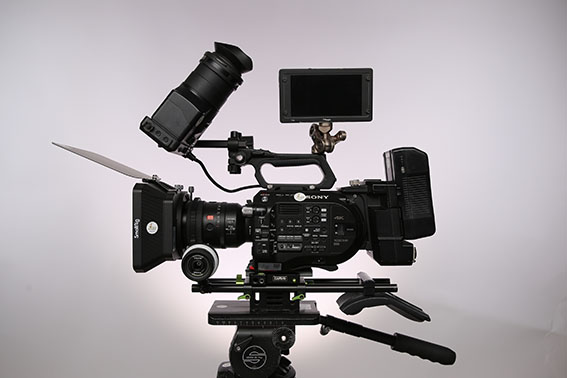
The most affordable member of Sony's Cinema Line, the FX30, has rapidly become the camera of choice for indie filmmakers, content creators, and DPs looking for a second body since its late-2022 launch. Positioned as the APS-C/Super35 sibling of the FX3, the FX30 offers an interesting balance of budget, ergonomics, and workflow. This guide uses Turkey's actual rental inventory pricing — FX30 daily 1,350 TRY — to clarify who this camera is right for, and where it falls short.
What Is the FX30, and Who Was It Built For?
The Sony Cinema Line family follows this hierarchy (top → most affordable):
- Venice 2 6K — premium cinema flagship
- Burano 8K — compact premium
- FX9 — standard production workhorse
- FX6 — full-frame run-and-gun
- FX3 — full-frame compact
- FX30 — Super35 compact (newest, most affordable)
The FX30 shares the same body as the FX3 — size, weight, top XLR handle, active cooling fan, IBIS, all identical. The single difference: the sensor. The FX3 has a full-frame (35mm) sensor; the FX30 has APS-C (Super35).
Target audience:
- Indie filmmaker (short film, festival project, first feature)
- Content creator (YouTube, TikTok, Reels)
- Documentary solo DP (budget-conscious)
- DPs looking for a B-cam (matched with FX3)
- University students / film school students
Quick Technical Look
| Spec | Value |
|---|---|
| Sensor | 26.1MP APS-C / Super35 (BSI Exmor R) |
| Recording formats | XAVC HS, XAVC S, XAVC S-I (no ProRes) |
| Max resolution | 4K 120fps (cropped), 4K 60fps (full sensor) |
| Bit-depth + dynamic range | 10-bit 4:2:2, 14+ stop dynamic range |
| Color science | S-Log3 + S-Gamut3.cine + S-Cinetone (direct delivery) |
| Dual base ISO | 800 / 2,500 |
| IBIS | 5-axis (same as FX3) |
| Body weight | 646g (same as FX3) |
| Cooling | Active fan — no long-take limit |
| Mount | Sony E mount |
| Recording media | SD UHS-II + CFexpress Type A |
FX30 vs FX3 — Practical Differences
The five critical points in the FX3 vs FX30 comparison:
| Spec | Sony FX3 | Sony FX30 |
|---|---|---|
| Sensor | 12.1MP Full-Frame | 26.1MP APS-C / Super35 |
| Crop factor | 1x | 1.5x |
| Low light (ISO 6400+) | Cleaner | Noise rises |
| Dual base ISO | 640 / 12,800 | 800 / 2,500 |
| Bokeh / DoF | Shallower (full-frame advantage) | Deeper |
| Lens compatibility | Full-frame native | APS-C native; full-frame lens 1.5x crop |
| Daily rental | 1,500 TRY | 1,350 TRY (~30% cheaper) |
| Weekly rental | 7,350 TRY | 6,615 TRY |
Workflow similarity: Same menus, same body, same IBIS behavior. A DP familiar with the FX3 transitions to the FX30 in five minutes — no learning curve.
Crop factor practical impact:
- Sony FE 24mm GM full-frame lens → effective 36mm on FX30 (1.5x crop)
- Sony FE 35mm GM → effective 52mm on FX30
- Sony FE 50mm GM → effective 75mm on FX30
- Sony FE 85mm GM → effective 127mm on FX30
This can be an advantage ("free" 1.5x reach for telephoto) or a disadvantage (insufficient wide angle). It needs attention in the setup plan.
FX30 vs Sony A7S III — The Hybrid Photo+Video Alternative
Does it make sense to choose the Sony Alpha A7S III over the FX30? Sony A7S III daily 1,400 TRY — close to the FX30's price point but a different design philosophy.
| Spec | FX30 | A7S III |
|---|---|---|
| Design focus | Cinema-only | Photo + video hybrid |
| Sensor | APS-C / S35 (26MP) | Full-frame (12MP) |
| Active cooling fan | Yes | No (overheating risk) |
| Top XLR handle | Yes | No |
| Lens-side record button | Yes | No |
| Low-light performance | Average | Excellent (full-frame + 12MP) |
| Photo use | Limited | Full EVF, photo-friendly |
| Daily rental | 1,350 TRY | 1,400 TRY |
The verdict:
- Video only, long handheld + cine workflow → FX30
- Hybrid photo + video, low-light heavy → A7S III
- BTS shoots + main shoot in the same kit → A7S III
- Solo DP documentary + long interview → FX30 (no overheating)
For more: Sony FX3 vs FX6 vs FX9 — Which Camera for Which Project?
FX30 Real-World Limits
Beyond the marketing, the practical constraints DPs face on set:
1. Noise in Low Light
The FX30 ships with a dual base ISO of 800/2,500. Above ISO 6400, noise rises rapidly. For night shoots, low-light interiors, and dawn/dusk scenes, you need to plan for ND filters and active lighting. The FX3's dual base ISO 640/12,800 is a clear advantage.
2. Crop Grows in 4K 120fps Mode
The FX30's 4K 120fps mode uses only a portion of Super35 — total crop reaches 1.7-1.8x. For wide-angle slow-motion, the Sony FE 14mm GM is the pick (1.5x crop = effective 21mm; in 4K 120fps mode ~25mm). That's a sensible wide frame.
3. No Internal ND Filter
No 8-stop internal ND like the FX6's. A filter set is mandatory for outdoor work — minimum ND 0.6 / 0.9 / 1.2 trio. More practical: matte box + filter holder.
4. No Viewfinder (EVF)
The FX30 ships with only the flip-out LCD. In bright outdoor sun, screen visibility is challenging. Solution: external monitor (Atomos Ninja V or SmallHD 5"). This adds rental cost but is essential for solo DP work.
5. Average Battery Life
NP-FZ100 batteries — 1.5-2 hours per charge. For an 8-hour day, you need 5-6 batteries + a dual charger. A disadvantage compared to the BP-U battery system in the FX6/FX9.
6. No Built-in ProRes
XAVC S/HS internal recording isn't ProRes. If you need ProRes, an external recorder (Atomos Ninja V) is required. For most post workflows, XAVC HS is sufficient — but ProRes is preferred for premium delivery.
Which Projects Justify the FX30?
| Project Type | FX30 Justified? | Why |
|---|---|---|
| Indie short (festival-bound) | ✅ Excellent | Budget-conscious, S-Cinetone direct delivery for festival quality |
| Documentary B-cam (paired with FX6/FX9) | ✅ Excellent | Same color science, parallel angle, lightweight |
| Content creator / digital content | ✅ Excellent | Cine quality for YouTube/Reels, AF + IBIS |
| Music video (single-DP) | ✅ Excellent | Compact + IBIS handheld style, economical budget |
| High-budget commercial (TVC) | ❌ No | FX9/Burano more appropriate; FX30 production value insufficient |
| Low-light heavy shoots | ❌ No | FX3 (full-frame) or FX6 (dual ISO) better fit |
| Slow-motion-heavy action | ~ Limited | 120fps cropped — RED Komodo or FX9 cleaner |
| University thesis project | ✅ Ideal | Lowest learning curve + budget + cine workflow |
FX30 Rental Packages
| Package | Contents | Price |
|---|---|---|
| Body only | Camera body alone | Daily 1,350 TRY · 3-day 3,240 TRY · Weekly 6,615 TRY |
| Basic Set | Body + Sony 24-70 GM zoom + Tilta cage + monitor + 4 batteries + 2 SD cards + single ND filter | ~3,000-3,500 TRY/day |
| Cine Set | Body + Sigma Art 5-prime set + matte box + ND filter set + follow focus + 6 batteries | ~5,500-7,000 TRY/day |
| Indie Festival (weekly) | Cine Set + Atomos Ninja V + EasyRig + Sennheiser EW lavalier set | ~25,000-35,000 TRY/week |
FX30 Practical Tips
1. Prefer S-Log3 + Post LUT
S-Cinetone direct delivery is good for fast turnaround, but for festival quality, S-Log3 + post LUT is more flexible. In Davinci Resolve with the Sony S-Log3 LUT you gain ~20% in dynamic range. S-Cinetone is "fix it in camera," S-Log3 is "fix it in post."
2. Set Custom White Balance
Auto WB is inconsistent (especially in mixed lighting). Set custom WB at 5500K (daylight) or 3200K (tungsten) — consistent color in post.
3. Use External Recorder Above 60fps
Internal 4K 120fps recording produces large files and slows the workflow. With an Atomos Ninja V external recorder, record ProRes HQ — much more manageable in post.
4. Prefer APS-C Lenses (When Possible)
For the FX30, Sigma E-mount Art lenses like the 14mm or 18-50mm are APS-C native. Full-frame lenses get a 1.5x crop = effective longer focal lengths — for wide angles, prefer APS-C native.
5. Use the Sennheiser MKE 600 Top Handle
The FX30's top XLR handle enables professional microphone integration. For documentary/interview work, the Sennheiser MKE 600 + DJI Mic 3 lavalier combination is the gold standard.
Common Mistakes — When Using the FX30
- Forgetting the 1.5x crop on full-frame lenses: Sony FE 24mm = effective 36mm. Plan wide-angle accordingly.
- Expecting an internal ND: There isn't one. Outdoor shooting without a filter set fails.
- Looking for an EVF: There's only an LCD. External monitor mandatory for solo DP.
- Shooting at ISO 12,800: Not the FX3's dual base. Above ISO 6400, noise becomes serious.
- Expecting FX9/Burano quality: The FX30 is the entry tier. Festival-grade yes, TVC requires a body upgrade.
For more: Sony FX3 vs FX6 vs FX9 Comparison · Short Film Budget Guide · Documentary Camera Selection
For FX30 rental or project consulting: +90 534 892 82 22 (WhatsApp) or the contact form. If you're a university student, mention "student discount" — 30% off with a reference letter from your advisor.
Frequently Asked Questions
How much is Sony FX30 rental per day?+
Sony FX30 body only is 1,350 TRY/day. The 3-day package is 3,240 TRY — about 15% off. The weekly package at 6,615 TRY is more cost-effective for longer shoots. Lenses, accessories, and ND filters are billed separately. University students get a 30% discount.
What's the main difference between FX30 and FX3, and which should I choose?+
Same body, same IBIS, same menus. The only major difference is the sensor. FX3 is full-frame (12MP, shallower DoF, cleaner low light), FX30 is APS-C/Super35 (26MP, 1.5x crop, deeper DoF). FX30 is about 30% cheaper daily. For low-light heavy work → FX3. For budget-conscious + festival quality → FX30. In multi-camera setups, FX3 + FX30 are matched (same color science).
How does the FX30 perform in low light?+
Dual base ISO is 800/2,500. Clean image in studio lighting or daylight. Above ISO 6400, noise rises rapidly — not enough for night street shooting or low-light interiors. In those scenarios, the FX3 (dual base 640/12,800) or FX6 is better. Positioning the FX30 as a "low-light camera" is misleading.
Does the FX30 have an internal ND filter?+
No, no internal ND filter. Don't expect a luxury like the FX6's 8-stop internal ND. A filter set is mandatory for outdoor — minimum ND 0.6/0.9/1.2 trio. Practical recommendation: matte box + 4×4 inch filter holder + ND set combination. Add filter set rental cost.
Does the FX30 + Sigma full-frame lens combination make sense?+
Yes, but mind the crop factor. A full-frame Sigma Art 35mm lens becomes effective 52mm on the FX30. This gives "free" 1.5x reach for telephoto (200mm = 300mm effective). But it can be insufficient for wide angles — Sigma Art 14mm GM = 21mm effective (still wide). APS-C native Sigma 18-50mm DC DN type lenses are also worth considering.
Can I shoot a festival-quality short with the FX30?+
Yes. 4K 60p XAVC S-I 600Mbps, 10-bit 4:2:2, 14+ stop dynamic range, S-Log3 + S-Cinetone — gives "production value" in festival juries. Sufficient for mid-to-upper-tier festivals (Istanbul Film Festival, Locarno). For top-tier (Sundance, Cannes) we recommend a body upgrade (FX6 or FX9), but the FX30 isn't a no-go either. For detailed budget: short film camera rental budget guide.